Information and Democracy: Education, Access, Libraries, and Society (ID:EALS)
ID:EALS 2025 – 2026 Virtual Speaker Series
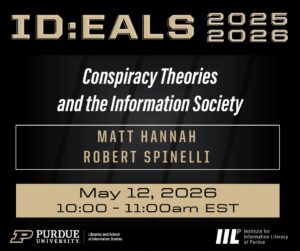
Our next guest speakers, Dr. Matt Hannah and Robert Spinelli presented “Conspiracy Theories and the Information Society.”
“Information is not neutral. It has become a frontline in the battle over truth and reality, which is ravaging our societies. In a time when information is an essential component structuring online life, we also see the rise and viral spread of conspiracy theories. Our talk will explore how our society is structured by our access to and application of information, in an age of unprecedented information overload, and the importance of being able to properly sift through incomplete data, misinformation, and disinformation especially when the political and social consequences of rampant conspiracism have become all too clear.”
Robert Spinelli is the archivist for Special Collections at Middle Tennessee State University. Prior to his role there, he worked in the non-profit museum sector and was the former Special Collections Librarian at Fisk University. In addition to his work in academic libraries, Mr. Spinelli is an active researcher in the fields of misinformation and death studies. His books include The Lizard People Don’t Want You to Read This: Essays on Conspiracy Theories in Popular Culture and Death, Commemoration & Cultural Meaning: Past & Present, both released in 2025. Mr. Spinelli’s third collection, Libraries, Archives & Collective Grief, is scheduled to be published by Bristol University Press in 2026.
Matthew N. Hannah is an Associate Professor of Digital Studies in the Department of Communication Arts and the Director of the Digital Scholarship Hub in the Libraries at University of Wisconsin-Madison. His research focuses on the political economy and public impact of online information, especially pertaining to conspiracy theories, mis/disinformation, and social media. He has published in Journal of Information Technology and Politics, Journal of Information Literacy, First Monday, Social Media + Society, and The Journal of Magazine Media, among others and he has co-edited Conspiracy Theories and Extremism in New Times (Lexington Books) and The Spectacle of Online Life (Bloomsbury). He is also currently co-editing a new collection called Conspiracy Theories and the Information Society (Berghan Books) with Robert Spinelli. His forthcoming co-authored book, QAnon, Capitalism, and the Crisis of Meaning (Bloomsbury) examines the political economy of the QAnon conspiracy theory within late capitalism.
Medieval Information Literacy: Research Into Practice
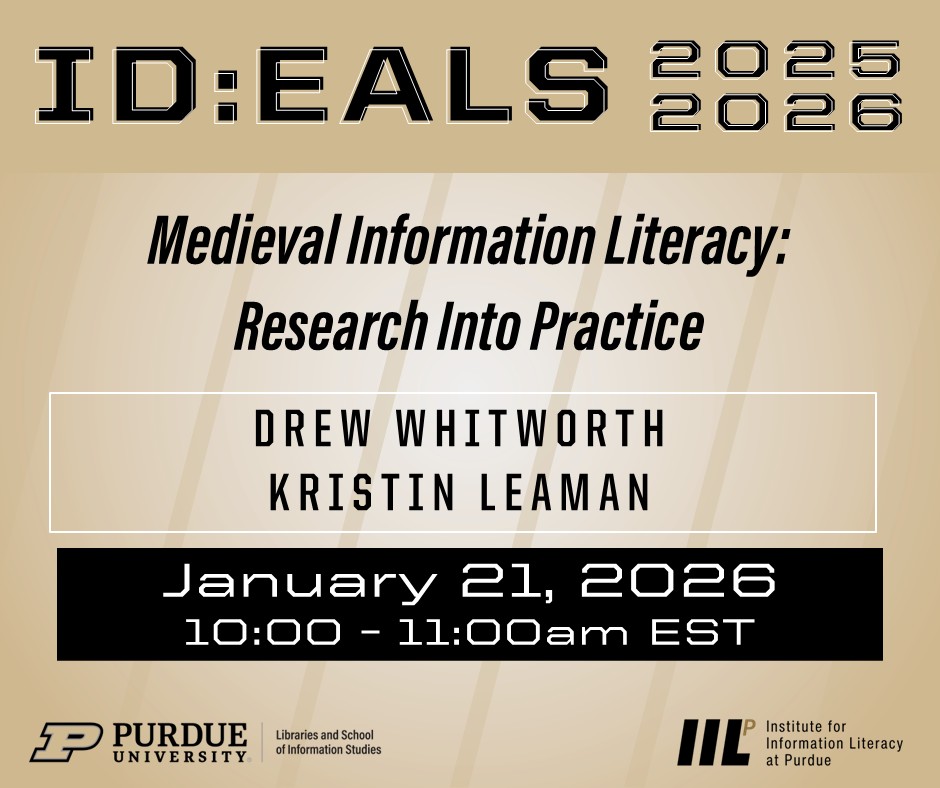
Our guest speakers, Dr. Andrew (Drew) Whitworth of the University of Manchester and Dr. Kristin Browning Leaman of Purdue University, will explore how scholars created and employed systems of information literacy to navigate the information spaces of the medieval period.
Advancing Women’s Health Information Literacy: Global Researcher Spotlights
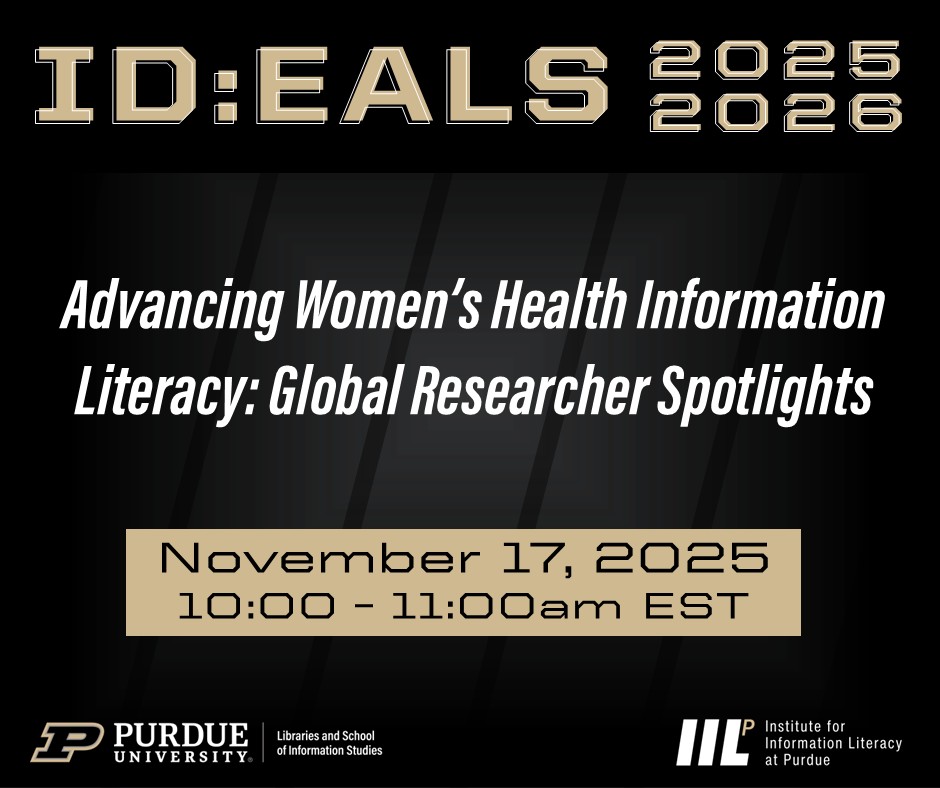
Leili Seifi and Neda Zeraatkar will present their research project, “Access and Strengthen Health Information Literacy: A Toolkit to Alleviate Information Poverty in Pregnant Rural Women in Iran.”
Professor Anwarul Islam will share his team’s ambitious project, “AI and Health Information Literacy: A Study Exploring the Perceived Usefulness, and Readiness Among Women in South Asia.”
Evidence-based Mindsets in an Era of Information Confusion: An Information Literacy Approach
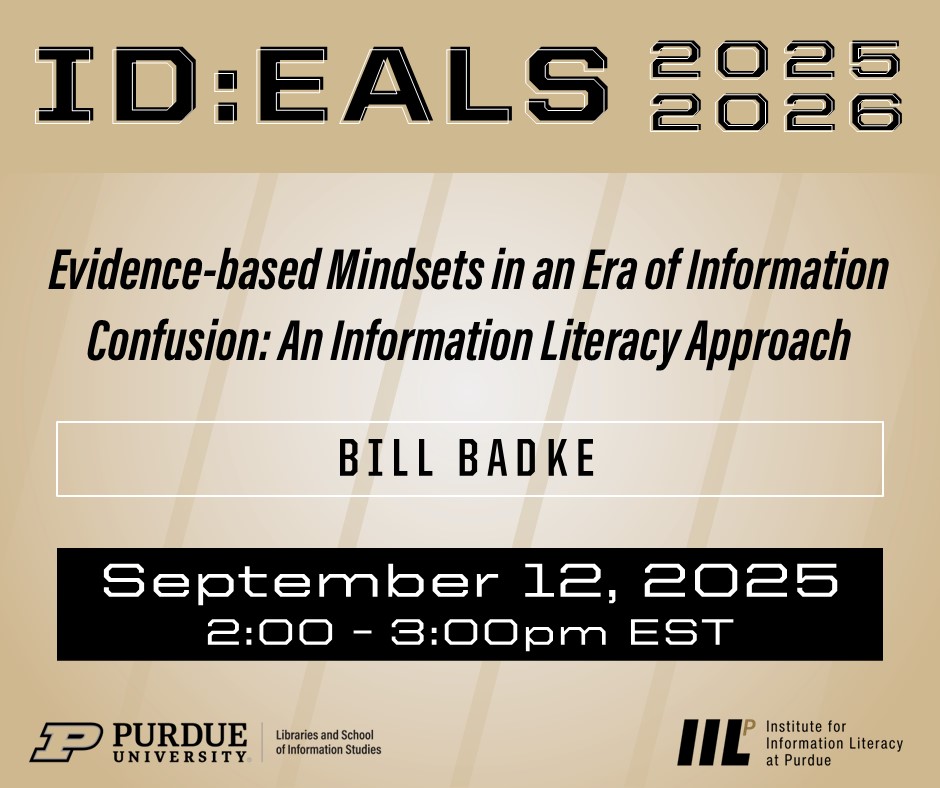
Professor Bill Badke, Associate Librarian for Information Literacy and Associated Canadian Theological Schools at Trinity Western University, will share his recent work on fostering evidence-based mindsets in information literacy education.
Informed Research in Practice: Libraries Empowering Graduate Students and Early Career Researchers

We are thrilled to kick off the ID:EALS 2025-26 speaker series with an interactive discussion with Dr. Christine Bruce and Dr. Susan Gasson about their work developing the Faces of Informed Research, a model that supports librarians in their work with graduate students and early career researchers.
During the session, attendees will be encouraged to share their views and ideas for empowering graduate students and early career professionals.
ID:EALS Symposia
Previously, the Institute hosted Information and Democracy: Education, Access, Libraries, and Society (ID:EALS) as symposia. They highlighted the work of notable information literacy researchers and placed them in dialog with politicians, businesspeople, educators, students, and others on the frontlines of combatting information disorder, such as health disinformation, information conspiracies, and other unethical uses of information affecting our society.