
Institute Highlights
Institute Announcement: ID:EALS Virtual Speaker Series
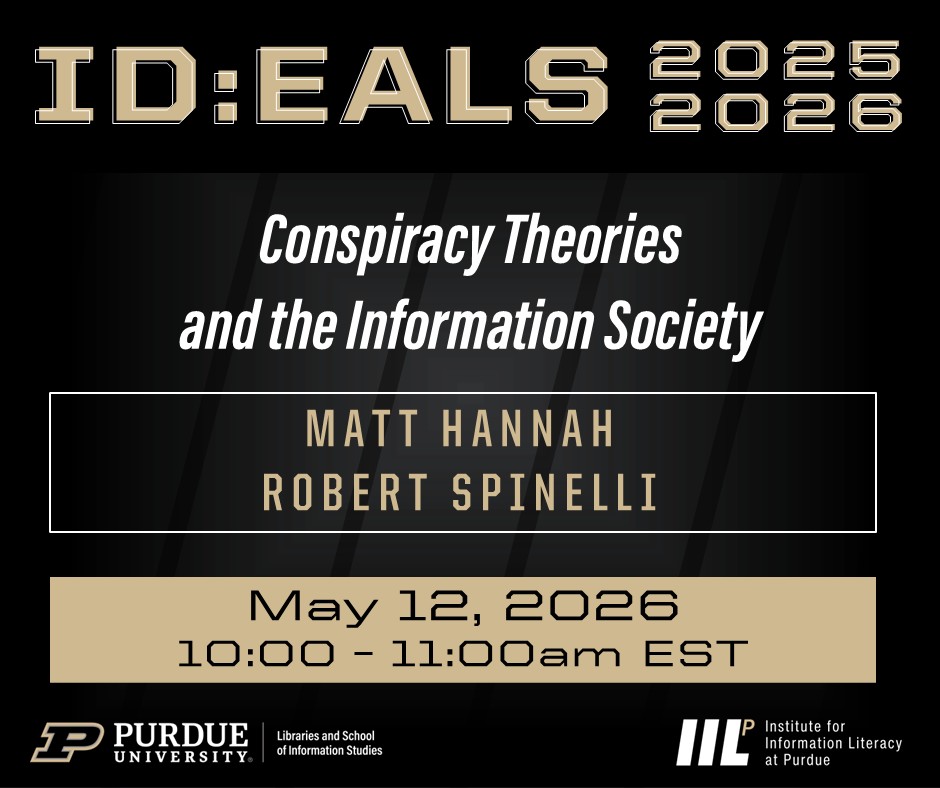
Conspiracy Theories and the Information Society with Dr. Matt Hannah and Robert Spinelli on Tuesday, May 12, 2026, 10-11am EST via Zoom.
Our next guest speakers, Dr. Matt Hannah and Robert Spinelli will present “Conspiracy Theories and the Information Society.”
“Information is not neutral. It has become a frontline in the battle over truth and reality, which is ravaging our societies. In a time when information is an essential component structuring online life, we also see the rise and viral spread of conspiracy theories. Our talk will explore how our society is structured by our access to and application of information, in an age of unprecedented information overload, and the importance of being able to properly sift through incomplete data, misinformation, and disinformation especially when the political and social consequences of rampant conspiracism have become all too clear.”
Institute Announcement: SPIRaL Applications are Open!
Applications open until March 26, 2026.
The Creativity Question: Humans, AI, and the Future of Creative Professions
SPIRaL: Student Partners for Information Research and Literacy
Undergraduate Research Program
SPIRaL trains a team of undergraduate researchers to investigate how information literacy can inform real-world solutions to contemporary information challenges, like mis/disinformation, inequitable access to information, and the rapidly expanding role of AI in our lives.
In the 26-27 academic year, SPIRaL will explore how AI is shaping the future of creative professions. SPIRaL scholars will interview Purdue undergraduates nearing graduation to explore:
- How they perceive creativity in their future professions.
- What roles and activities they envision for humans and AI in the creative work of their field.
- How their education is (or isn’t) preparing them for this new landscape.
This is a chance to shape the conversation about creativity, technology, and the future of work through a hands-on research experience with other undergraduate researchers from across campus.
Institute Announcement: ID:EALS Virtual Speaker Series
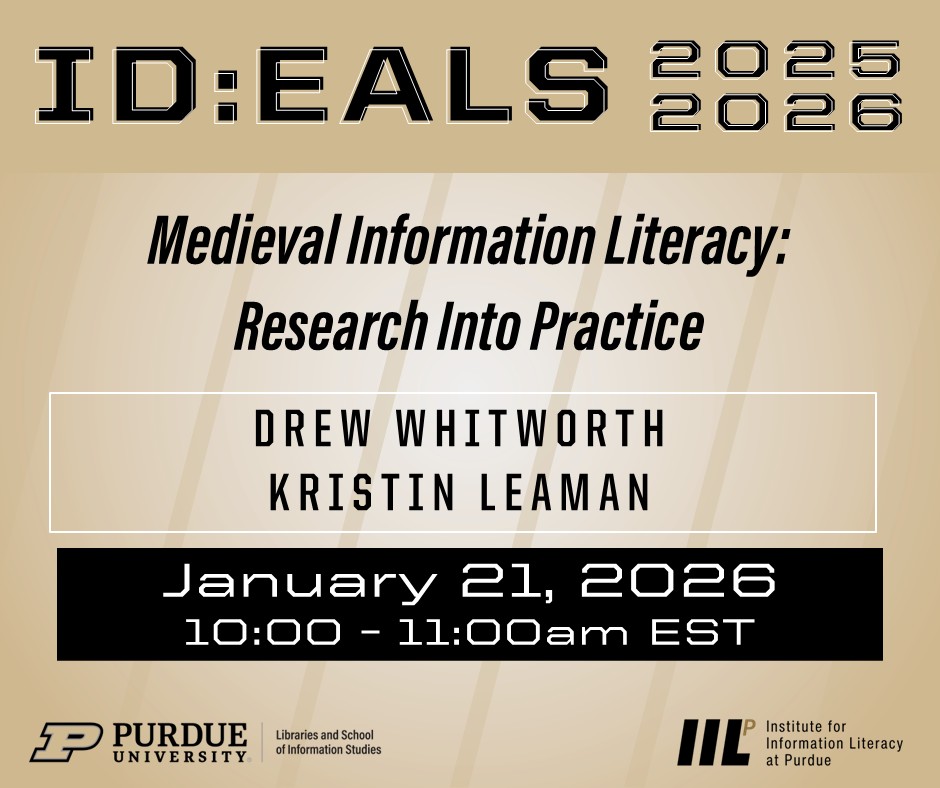
Medieval Information Literacy: Research Into Practice with Drew Whitworth and Kristin Leaman on Wednesday, January 21, 2026, 10-11am EST via Zoom.
Our guest speakers, Dr. Andrew (Drew) Whitworth of the University of Manchester and Dr. Kristin Browning Leaman of Purdue University, will explore how scholars created and employed systems of information literacy to navigate the information spaces of the medieval period.
Dr. Whitworth is a longstanding scholar of information literacy whose work examines the importance of information literacy education, as well as how information literacy relates to power. His research on medieval information literacy highlights how scholars developed information literacy methods and concepts to help junior scholars learn how to navigate book manuscripts and other premodern sources of information.
Dr. Leaman is an expert in medieval manuscripts, book history, and information studies, with a focus on medieval and early modern dis- and misinformation. Building upon her dissertation, Dr. Leaman’s in-progress book Printing Ælfric in Early Modern England, 1566-1687 (under contract with Brill Publishers) pioneers a new interdisciplinary approach by applying a critical disinformation framework to early modern editions of Old English texts, an intersection that has yet to be systematically explored. Dr. Leaman teaches a wide range of courses in the School of Information Studies and the Department of English, including Medieval Manuscript Studies, Medieval Mis/Disinformation, Research Methods for Rare Books, Medieval British Literature, and Introductory Composition.
Institute Announcement: ID:EALS Virtual Speaker Series
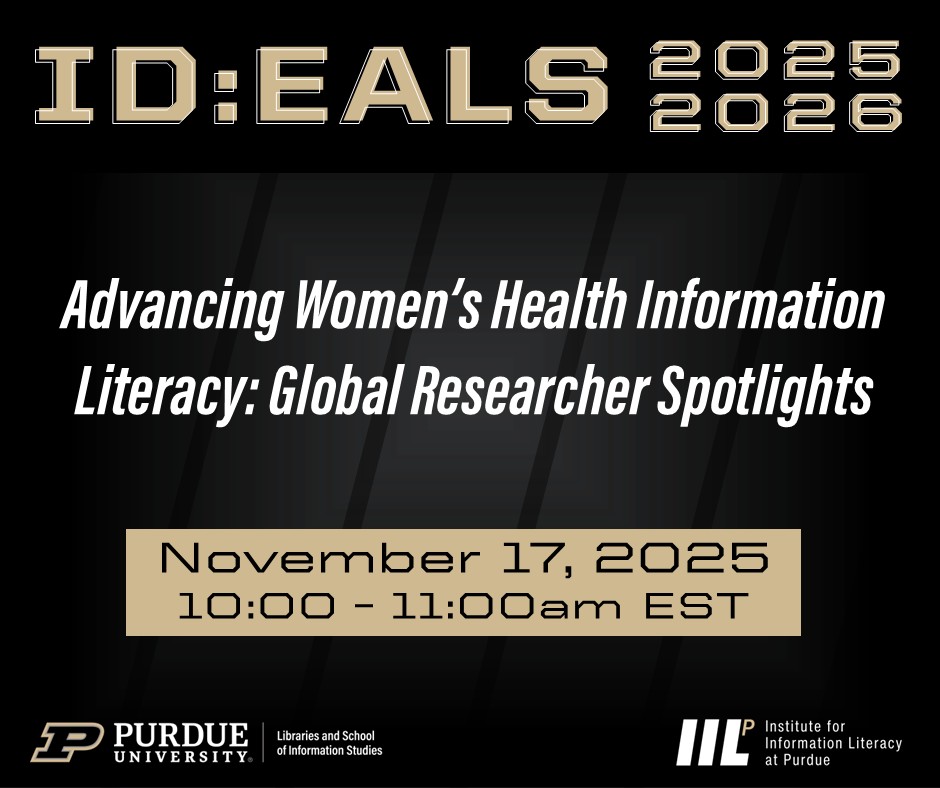
Advancing Women’s Health Information Literacy: Global Researcher Spotlights with Leili Seifi and Neda Zeraatkar, and Professor Anwarul Islam on Monday, November 17, 2025, 10-11am EST via Zoom.
We are thrilled to feature two research teams in our upcoming ID:EALS 2025-26 online speaker series whose respective projects examine women’s health information literacy needs and future solutions.
Leili Seifi and Neda Zeraatkar will present their research project, “Access and Strengthen Health Information Literacy: A Toolkit to Alleviate Information Poverty in Pregnant Rural Women in Iran.” Seifi and Zeraatkar aim to understand the health information awareness of pregnant women in rural Iran in order to develop tools for strengthening health information literacy in regions that lack health centers and libraries. Seifi and Zeraatkar will share findings from their expansive literature review, which will inform future data collection efforts.
Professor Anwarul Islam will share his team’s ambitious project, “AI and Health Information Literacy: A Study Exploring the Perceived Usefulness, and Readiness Among Women in South Asia.” Across five countries, the team seeks to identify South Asian women’s perceptions of AI’s usefulness and their readiness to utilize AI technology to support health information needs. Professor Islam will share early research findings from focus groups conducted in India, Bangladesh, the Maldives, Pakistan, and Sri Lanka. The research team is comprised of the following researchers:
- Md. Anwarul Islam, Professor in the Department of Information Science and Library Management, University of Dhaka, Bangladesh
- Bhakti Gala, Assistant Professor in the Department of Library and Information Science, Central University of Gujarat, India
- Aminath Riyaz, Assistant Professor in the Department of Social Sciences, The Maldives National University, Maldives
- Raj Kumar Bhardwaj, Librarian, University of Delhi, India
- Tabassum Aslam, Academic Librarian for the Lahore School of Economics, Punjab, Pakistan
Zeraatkar, Seifi, and Islam are recipients of the Institute for Information Literacy at Purdue’s 2024-2026 seed grants. The Institute’s seed grant program funds two-year research projects that examine complex, contextual information challenges with the aim of developing new information literacy models that enable people to successfully navigate and contribute to today’s information environment.
Attendees will learn more about current research happening around the globe to advance women’s health information literacy. Attendees are encouraged to pose questions and reflect on how insights from this ongoing research may inform information literacy education in a range of library contexts.
Institute Announcement: ID:EALS Virtual Speaker Series
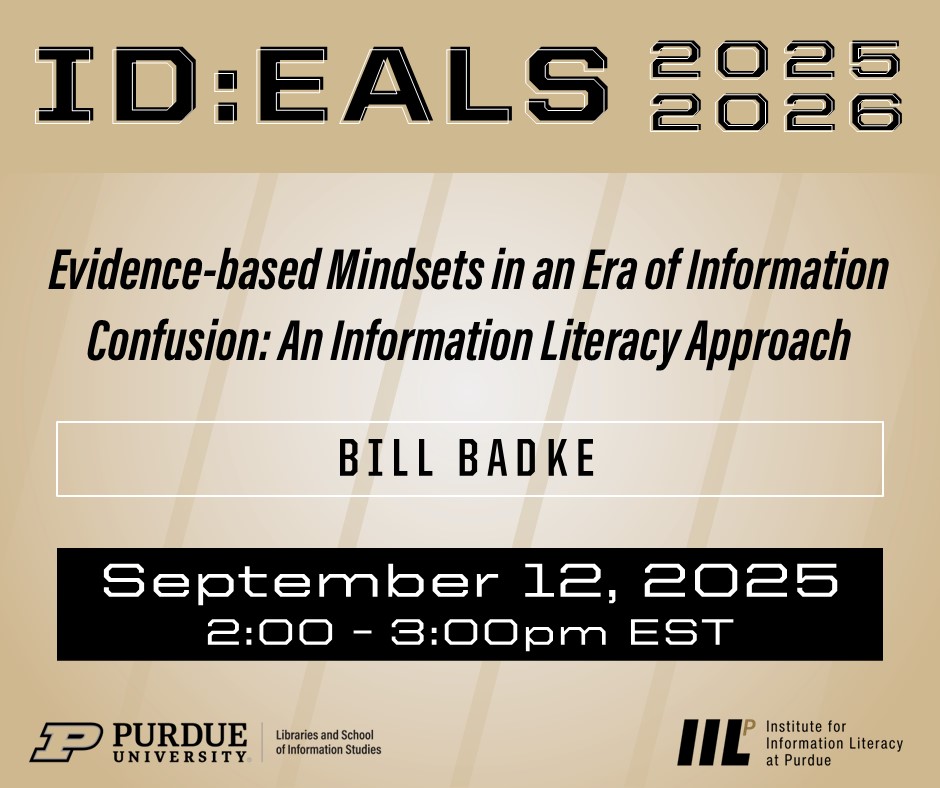
Evidence-based Mindsets in an Era of Information Confusion: An Information Literacy Approach with Professor Bill Badke on Friday, September 12, 2025, 2-3pm EST via Zoom.
We are thrilled to host another virtual research talk in our ID:EALS 2025-26 speaker series. Professor Bill Badke, Associate Librarian for Information Literacy and Associated Canadian Theological Schools at Trinity Western University, will share his recent work on fostering evidence-based mindsets in information literacy education.
Badke will discuss one of the most significant crises in today’s world–information confusion, which characterizes the inability of many people, including our students, to determine what information is trustworthy and what is not. Information confusion has led to wild conspiracy theories, information silos, a distrust of scholarship, and a general sense that we have lost our moorings and can no longer see the shore.
Professor Badke’s work with information authority and his interactions with students in 40 years of information literacy credit courses has given him an understanding of the issues and a possible path forward. While he does not claim to have unassailable answers, Professor Badke’s talk will provide some direction to attendees that takes us away from facile answers like “Use a checklist” or “Only access scholarly sources” in order to address the challenges we face in today’s information environment.
About William Badke: Professor Badke is an Associate Librarian for Information Literacy and Associated Canadian Theological Schools at Trinity Western University. A leader in information literacy research and education for decades, Professor Badke has published extensively on information literacy and the research process, and he has taught research courses for 40 years. He has been recognized as an information literacy champion by the National Forum for Information Literacy in 2011. His recent work includes contributing to the Information Literacy Handbook: Charting the Discipline, which brings together information literacy experts from around the world to discuss information literacy’s emergence as a discipline and how information literacy educators may bolster their practice through viewing information literacy as a discipline.
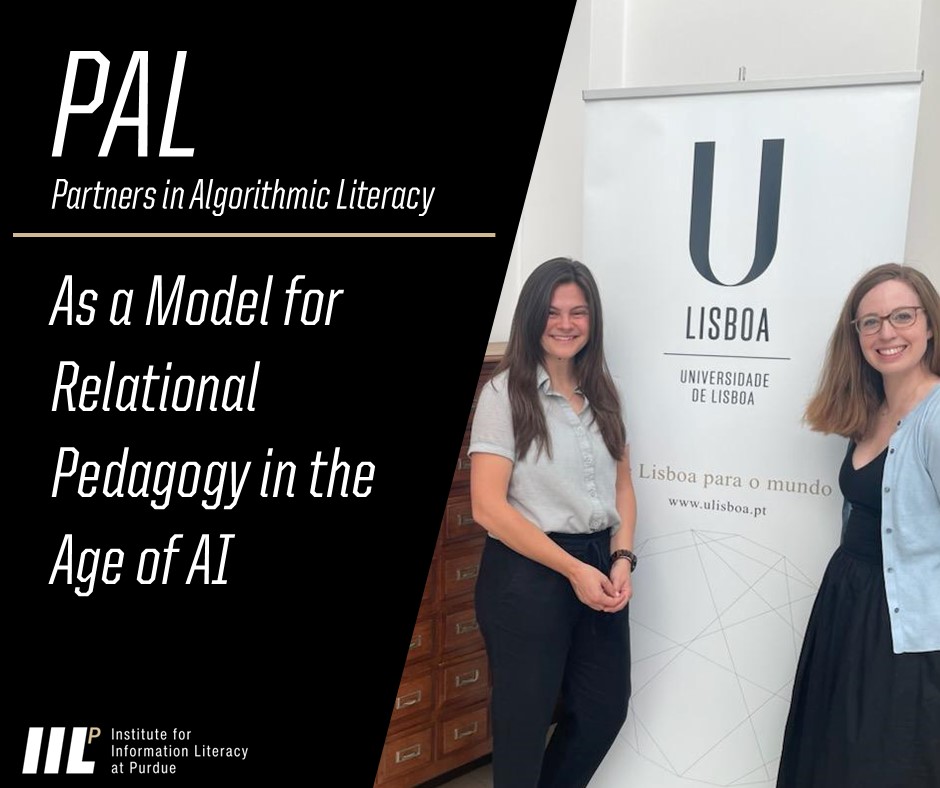
Institute Spotlight: PAL As a Model for Relational Pedagogy in the Age of AI
At the 17th Qualitative and Quantitative Methods in Libraries International Conference (QQML), School of Information Studies professors Samantha LeGrand, Zoe Mayhook, and Jing Lu presented a research study on PAL (Partners for Algorithmic Literacy), a student-faculty learning community designed and run by the Institute for Information Literacy at Purdue. Their talk emphasized the significance and effectiveness of partnership-based learning in the age of AI, using the Partners for Algorithmic Literacy (PAL) program as their example.
QQML
QQML brings together library and information science professionals from around the world to advance the theory and practice of qualitative and quantitative methods in libraries and archives. This year’s conference featured more than 40 sessions showcasing work focused on the transformation and innovation of libraries and archives in the digital age. Talks explored AI and digital literacy, accessible services for diverse users, and the evolving role of libraries in education and community engagement —through theoretical, practical, and ethical lenses.
Co-creating AI Learning Solutions
In their talk, Co-creating AI Learning Solutions, Professor LeGrand and her colleagues proposed moving beyond one-sided and fear-based responses to AI by fostering a relationally centered approach to AI learning and creating space for dialogue and collaboration in the classroom. The PAL program, in which students and instructors worked together to design AI learning solutions, provided a case study. The team is conducting a qualitative thematic analysis of text-based deliverables from PAL participants’ individual and collaborative work. Through this analysis, they have explored how participants developed their understanding of algorithms together and created solutions for more effective pedagogical use of AI tools.
Perspective
At the heart of the pedagogical partnership in PAL are three guiding values: respect, reciprocity, and responsibility. Respect involves building deeper relationships with students through genuine dialogue. Reciprocity indicates the opportunity to contribute and benefit equally. Responsibility means that the goals and approaches of learning and teaching are jointly navigated, with shared responsibility for outcomes. PAL participants enact these values by sharing perspectives, co-learning and co-teaching through hands-on AI tool exploration, and co-designing AI-related curriculum components implemented in the instructor’s course.
Future of Learning and Libraries
Samantha and her colleagues’ qualitative analysis has shown the effectiveness of hands-on engagement with AI in partnership-based learning contexts such as PAL. This finding suggests that in the age of AI, relational pedagogy is more vital than ever, and libraries are well-positioned to serve as vibrant spaces for community-centered AI literacy and education.
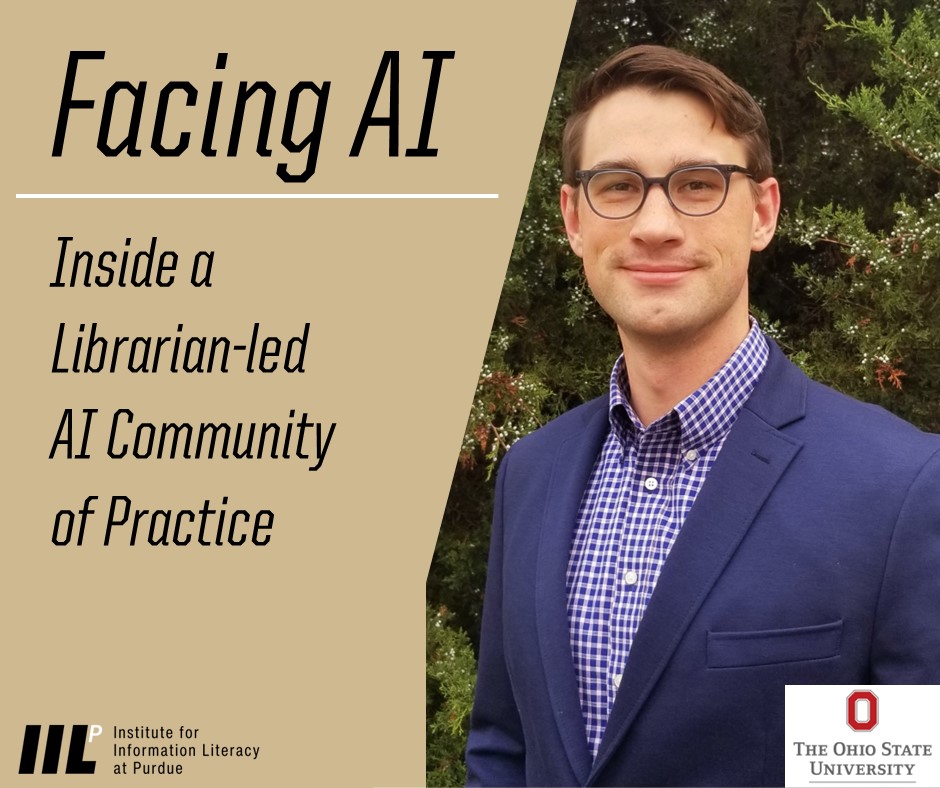
Institute Spotlight: Facing AI: Inside a Librarian-led AI Community of Practice
The Institute for Information Literacy at Purdue (IILP) aims to bring together researchers, educators, and other stakeholders from around the world to explore societal information challenges and expand information literacy research and education. IILP is involved in advancing information literacy through the development of novel educational programs that address the information needs of today, such as Partners for Algorithmic Literacy (PAL), a signature faculty-student development program focused on developing AI instruction, as well as awarding seed grants to international research groups that are conducting studies to examine the utility, affordances, and challenges posed by AI, including “Understanding Ph.D. Students’ Perceptions and Information Literacy Skills Interacting with ChatGPT-Generated Content” and “AI and Health Information Literacy: A study exploring the perceived usefulness, and readiness among women in South Asia.”
We recently sat down with Michael Flierl, the Student Learning Librarian at the Ohio State University Libraries and an IILP fellow whose work focuses on broadening IL in the wake of AI. Flierl shared his view on how AI is shaping higher education, the opportunities he sees for evolving information literacy to meet the needs of today’s information environment, and how library organizations and communities, like the IILP, can support this work.
Since the release of ChatGPT 3.0 in November 2022 and witnessing the confusion and apprehension coming from educators about how to teach in an AI era, Flierl’s approach to information literacy has shifted dramatically. The proliferation and capabilities of generative AI has led to an entirely different kind of information environment that requires people to understand and critically evaluate information at a completely new scale and in entirely new ways. Flierl adamantly calls for librarians–experts in how information is produced, organized, disseminated, and used–to lead the way in rethinking information literacy in the age of AI. He advocates for librarians to promote approaches to IL that embrace collective knowledge, take a critically reflective stance towards determining how AI ought to be used and under what conditions, and to maintain a curious and evolving attitude towards information literacy in an era of rapid technological change. Designating this approach “AI pragmatism”, Flierl advocates for future IL education to be grounded in promoting community dialogue and inquiry around AI (with librarians, disciplinary instructors, and students), while taking a critically reflective and ethically minded stance in determining how AI ought to be used. Foremost, Flierl argues for librarians to assume a curious and evolving attitude towards information literacy in an era of rapid technological change.
Part of his personal effort to model pragmatic approaches to information literacy education, Flierl co-founded the AI Community of Practice with colleagues from the Ohio State University Libraries and Carnegie Mellon University Libraries in August 2024. The AI Community of Practice is a free, accessible network for librarians, scholars, and professionals to share resources, insights, and importantly learn from one another’s evolving AI teaching and research practices. Flierl explains that the AI Community of Practice fills an important gap in cross-institutional dialogue around AI with librarians bringing together disparate and curious voices to learn from and with one another.
Though people are increasingly accustomed to generative AI infiltrating their personal and professional lives, Flierl finds that creating productive, knowledge-generating spaces for dynamic, real-time dialogue around AI is more important for the work of information professionals than ever before. Librarians must keep up with the rapid developments in AI, and concretely address new and complex ethical, legal, and pedagogical concerns that generative AI poses in their work. Crowdsourcing knowledge and insights from a variety of institutional and disciplinary contexts can help librarians feel better prepared to teach students how to understand and purposefully and ethically work with AI across their lives. Librarians seem to agree! The AI Community of Practice currently has over 1,100 subscribers and nearly 500 Discord members, who participate outside of the monthly online meetings to continue to discuss the intellectual property, pedagogy, accessibility, and misinformation dimensions of AI.
Flierl argues that the future of information literacy education is contingent on librarians proactively learning about and teaching others about the power and the potential of generative AI. For him, the AI Community of Practice is a necessary space to inform positions and brainstorm pedagogical strategies to prepare learners for navigating our AI powered information ecosystem.

Institute Announcement: ID:EALS Virtual Speaker Series
Informed Research in Practice: Libraries Empowering Graduate Students and Early Career Researchers with Dr. Christine Bruce and Dr. Susan Gasson on Thursday, July 10, 2025, 4-5pm EST.
We are thrilled to kick off the ID:EALS 2025-26 speaker series with an interactive discussion with Dr. Christine Bruce and Dr. Susan Gasson about their work developing the Faces of Informed Research, a model that supports librarians in their work with graduate students and early career researchers.
During the session, attendees will be encouraged to share their views and ideas for empowering graduate students and early career professionals.

Institute Announcement: 2025-2026 ID:EALS Virtual Speaker Series
The Institute is excited to host ID:EALS, a six-part series of research talks this year. ID:EALS will feature innovative information focused researchers whose work is advancing information literacy knowledge and practice.
Stay tuned for our first talk in July!
Institute Announcement: 2024-2026 Seed Grant Awardees
Congratulations to recipients Dr. Leili Seifi (University of Birjand, Iran); Dr. Neda Zeraatkar (Emory University, USA) for receiving $4,000 in support of their research!
Access and Strengthen Health Information Literacy: A Toolkit to Alleviate Information Poverty in Pregnant Rural Women in Iran
This study will explore ways to alleviate the health information poverty of rural pregnant women in Iran, while identifying avenues for strengthening and increasing health information awareness of rural pregnant women who lack access to health centers and libraries.
Institute Spotlight: Algorithmic Literacy
How information needs to be accessible, especially in healthcare.
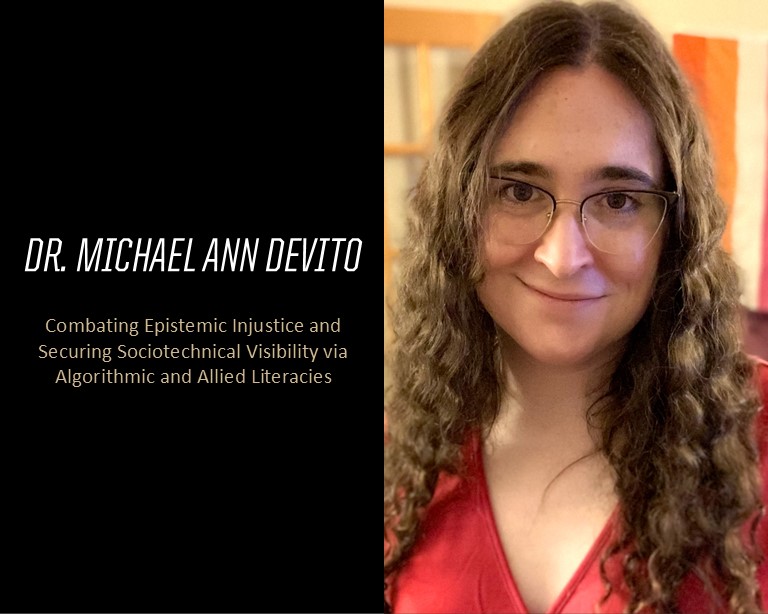
Dr. Michael Ann DeVito, our invited speaker from ID:EALS 2024, explains folk theorization’s role in fostering algorithmic literacy!
Clipped from her presentation, “Combating Epistemic Injustice and Securing Sociotechnical Visibility via Algorithmic and Allied Literacies.”
“There’s been a lot of talk about algorithmic literacy lately and rightly so. It’s a crucial literacy that I would argue we are far behind on studying, understanding, & boosting. There’s still plenty of debate over what our approach to algorithmic literacy should be, & perhaps unsurprisingly I have a rather strongly held position in that debate. I propose that our standard for algorithmic literacy should not be a static set of skills, performance on tests, or batteries of questions, or even the much-vaunted ability to code. I know as a computer scientist that’s a surprising thing to be hearing, but I really don’t think that’ll do it. Our standard for algorithmic literacy should be structural folk theorization, because it gives the individual the tools they need to think strategically, to theorize about & react to causes, & to adapt their behavior directly to the algorithmic system itself. Structural theorization essentially gives the user agency. The agency to pursue their goals, which is the very heart of a modern literacy. & also our strongest tool for helping people fight the epistemic injustice they are faced with every day. It’s not perfect, it won’t solve all of our problems, but it is a start. We know it can work, because I’ve consistently shown through my own work that some folks are already out there doing it, already out there every day using their structural folk theorization ability to break through the hermeneutical injustice of opaque unexplained socio-technical visibility systems.”

Institute Spotlight: Information’s Role in Health Equity
How information needs to be accessible, especially in healthcare.
Dr. Megan Threats, our keynote speaker from ID:EALS 2024, quotes scholar Dr. Beth St. Jean in identifying how information needs to be physically & intellectually accessible in order to ensure health equity
Clipped from her presentation titled, “InFormation for Health Justice: Utilizing Intersectionality Theory in (Health) Information Practices Research.”
“Information is very clearly one of the central resources to which one needs both physical and intellectual access in order to have a sufficient and equitable capability to be healthy.”
Institute Announcement: 2024-2026 Seed Grant Awardees
Congratulations to recipients Dr. Anwarul Islam (University of Dhaka, Bangladesh), Dr. Bhakti Gala (Central University of Gujarat, India), Dr. Aminath Riyaz (The Maldives National University, Maldives), Dr. Raj Kumar Bhardwaj (University of Delhi, India), and Tabassum Aslam (Lahore School of Economics, Punjab, Pakistan), who were awarded $4,000 in support of their research!
AI and Health Information Literacy: A study exploring the perceived usefulness, and readiness among women in South Asia
This study aims to understand how women in South Asian countries perceive the usefulness of AI in enhancing health information literacy and the factors that influence readiness to adopt AI-driven health information technologies. The outcomes of the study may assist policymakers and governments in creating health information policies tailored for women in this region, leading to better healthcare outcomes, informed decision-making, and increased gender equality
Institute Spotlight: Combating Misinformation
Critical Thinking vs. Fallacies
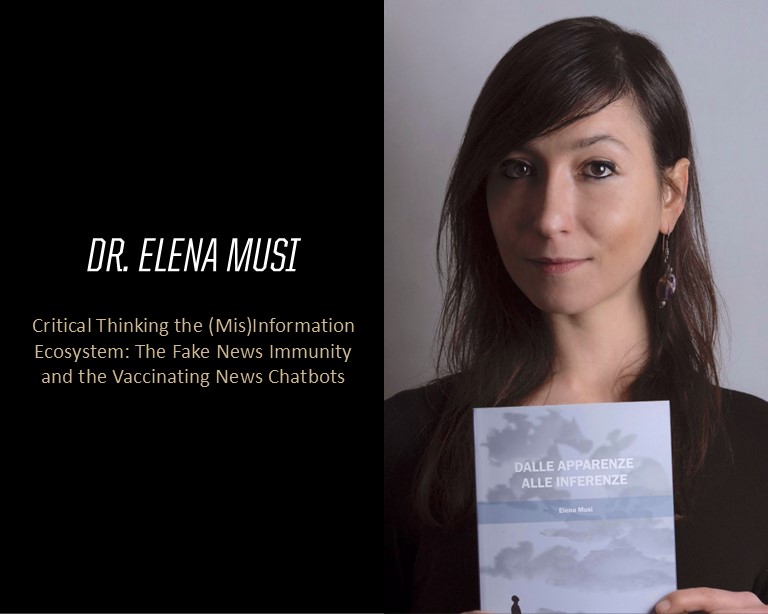
Dr. Elena Musi, the winner of the ID:EALS 2024 Publication Award, explains how we can empower citizens to be fact-checkers using Fallacy Theory & Human-Computer Interaction to combat misinformation.
Clipped from her presentation titled, “Critical Thinking the (Mis)Information Ecosystem: The Fake News Immunity & the Vaccinating News Chatbots.”
“Our main goal is that of reverse engineering the manipulation of information providing citizens with the means to act as fact checkers & also communication gatekeepers with the means to avoid creating in the first place, but also spreading misleading news. To do so we have combined Fallacy Theory & Human Computer Interaction. So I’ll explain what fallacies are just in a moment. So our theoretical approach tackles the infodemic through two main fields: computational rhetoric & argumentation mining & information literacies, which both requires the exercise of critical thinking, right. So I guess we all agree that the proliferation of information across the web calls for computational approaches to understand the roots of virality, meaning arguments that shape public opinion, & lines of diffusion of information in crisis scenarios. The current of our framework are fallacies. Fallacies are arguments that seems to be valid, but they’re not. We hypothesize that they work as indicators of fake news & it happened to be so.”

Institute Announcement: 2024-2026 Seed Grant Awardees
Congratulations to recipients Alexandra Howard & Amber Willenborg (University of Louisville); Dr. Nicole A. Cooke (University of South Carolina) for receiving $4,000 in support of their research!
Context & Connections: Applying the Critical Cultural Literacy Model to Community-Based Learning
This study aims to apply the Critical Cultural Literacy model to community-based learning courses to equip undergraduate students with a more holistic critical cultural literacy. The research team will develop an online toolkit that librarians and faculty can use to facilitate classroom conversations around critical cultural literacy and help students develop skills that are imperative for inclusive and equitable civic engagement.

Institute Spotlight: Restoring Cultural Context
Indigenous Knowledge Systems & Repatriation
Dr. Jessie Loyer, a featured panelist at ID:EALS 2024, explains how repatriation helps repair cultural fractures by restoring the context of artifacts, which are often viewed in isolation within museums, rather than as part of a holistic knowledge system.
Clipped from her presentation titled, “Collections Are Our Relatives: Indigenous Interventions.”
“We can think about the way that something like repatriation is repairing fracture. So here is a picture of me, I’m in the field museum in Chicago and I’m looking at a sash here that I believe it to be finger woven. I’m a weaver as well and so you can look at the way that the warp and the weft of the threads are drawn together to kind of understand how this was created. Now visiting items like this in something like a museum is so essential for this idea of a holistic knowledge system, because for many of these items they are out of context. We see them as kind of the item itself without out seeing how it functions within the entire knowledge system.”

Institute Spotlight: Information Inequity & Default News Sources
Inequity in Navigating Information Sources
Dr. Chelsea Peterson-Salahuddin, a member of our panel from ID:EALS 2024, explains how information inequity is perpetuated with default news sources & institutions and, as a result, requires more labor from underrepresented groups to seek out appropriate & applicable information.
Clipped from her presentation titled, “Towards Equitable Information: Understanding & Addressing Barriers to Black & Women of Color’s Information Access & Use.”
“There was still often though a disconnect participants talked about between their lived experiences & the default information that was often provided to them. Specifically, through mainstream U.S. news sources. So, when thinking about how news as an institution produces information marginalization & in turn information inequity, I think it’s also important to think about not only how this how this critical orientation, while not necessarily an information barrier, does necessitate an additional labor on the part of these communities in engaging in information seeking. Therefore, while not a barrier per se could be seen as a form of inequity, in that this amount of labor is not necessarily required of a white middle-class American who are engaging with these new sources, right.”
Institute Announcement: 2024-2026 Seed Grant Awardees
Congratulations to recipients Rachel Adler, Abhinav Choudhry, & Kyrie Zhixuan Zhou (University of Illinois, USA) for receiving $4,000 in support of their research!
Gamified Finance Simulator for Older Adults: A Financial Literacy & Vulnerability Intervention
This interventional study seeks to improve the financial literacy, reduce the financial vulnerability, and improve the self-efficacy of older adults through the use of a finance simulator that teaches older adults to accomplish digital banking and ecommerce tasks and learn ways to guard against online security threats.
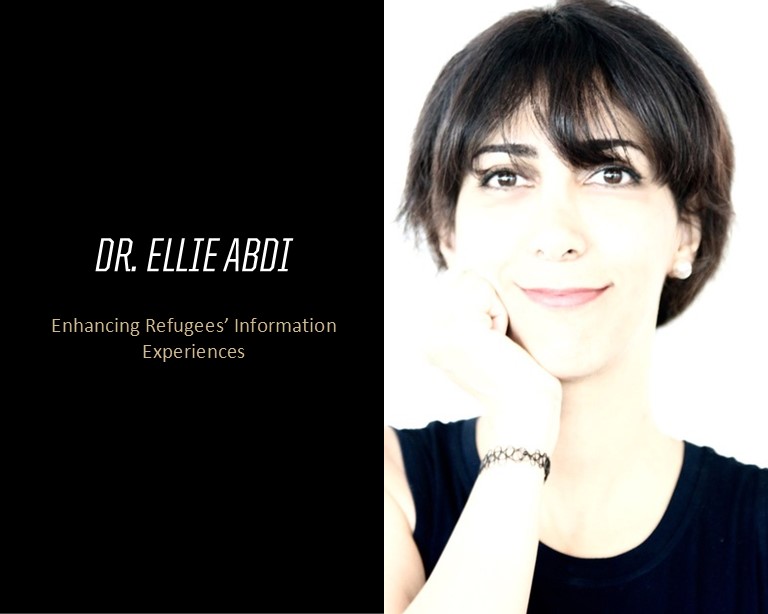
Institute Spotlight: Information Literacy & Refugee Resettlements
Information Literacy & Independence
Dr. Ellie Abdi, a member of our panel from ID:EALS 2024, explains how information literacy can impact the journey for refugees & their experiences with resettlement & integration through independence & empowerment!
Clipped from her presentation titled, “Enhancing Refugees’ Information Experiences.”
“Considering these ways, as experiences of information literacy means that individuals who engage with a wider range of ways of experiencing information can be assumed more information literate. And because of the significance of information in the resettlement and integration process discussed earlier, being more information literate translates to a smoother journey in resettlement and integration for refugees. Also, experiencing more independent ways of using information, so the ones in the lower part of the diagram, may foster a sense of empowerment and independence. So those being able to engage with information in more independent ways may also experience a more independent resettlement and integration process.”
Join the newly formed AI Community of Practice (AI COP) for academic librarians in collaboration with The Ohio State University & Carnegie Mellon University!
The inaugural meeting will be held Wednesday, August 28th, 2023 at 1:00 PM – 2:00 PM EST / 10:00 AM – 11:00 AM PST. To participate in the first meeting, please register at https://tinyurl.com/yep72fwf
The AI COP aims to create a vibrant, inclusive community where academic librarians can explore the opportunities and challenges of artificial intelligence together. Key aspects of our community:
Open dialogue: All viewpoints on AI are respected and valued.
Knowledge sharing: Learn from colleagues and identify collaboration opportunities.
Resource development: Work together to create shared AI resources and publish them in open access institutional repositories.
Join us in shaping the future of AI in academic libraries!
Institute Spotlight: Folk Theorization in Understanding Social Media
Is there a better way we can understand & navigate social media & the information it dispenses?
Dr. Michael Ann DeVito, our invited speaker from ID:EALS 2024, explains folk theorization & how it can determine the ways society collectively interprets & navigates social media platforms, such as TikTok!
Clipped from her presentation titled, “Combating Epistemic Injustice and Securing Sociotechnical Visibility via Algorithmic and Allied Literacies”
“We turn to folk theorization because we need to make decisions anyway, whether we have the truth about a process or a platform or not. In the context of HCI and social platforms, folk theories are how we figure out how to navigate algorithmic environments, even though platforms refuse to tell us how they actually work even when we ask nicely. They are how we construct useful guesses. Folk theorization is our built-in natural cognitive bow work against platform-mediated sociotechnical epistemic injustice; a hermeneutic tool that lets us look at our situations, and without much outside data at all, rest interpretive resources out of the technology itself, and out of our collective attempts to sense make around these injustices.”
Institute Spotlight: Intersectionality as a Solution
Intersectionality as a praxis!
Dr. Megan Threats, our keynote speaker from ID:EALS 2024, discussed the importance of intersectionality as a praxis in how to approach gathering & using information in health justice for all individuals!
Clipped from her presentation titled, “InFormation for Health Justice: Utilizing Intersectionality Theory in (Health) Information Practices Research.”
“Intersectionality! I believe that intersectionality is the approach that we can use as practitioners and as researchers to better get an understanding of how we can be in formation health justice.”

Institute Highlight: 2022-2024 Seed Grant Awardees
The Institute wants to highlight the work of 2022-24 Seed Grant awardees Yvonne Eadon (The University of North Carolina at Chapel Hill) and Stacy Wood (University of California, Los Angeles), on their project titled “The Truth is in the Stacks: Searching for Information Literacy in Conspiracy Theory Research Institutions.”
Eadon and Wood’s work attempts to understand conspiracy theories as complex phenomena with both historical roots and contemporary implications that require persistent community input to survive and thrive. In other words: conspiracy theories are a lot of work! In this project, Eadon and Wood are interested in how resistant research communities, or people doing collective research outside of mainstream institutional settings, interact with information resources and concepts of information literacy.
As part of the Institute seed grant, Eadon and Wood have worked toward developing a database of institutions trusted and used by resistant researchers and have begun an in-depth organizational history of the one of the longest-running UFO research organizations, the Mutual UFO Network (MUFON).

Institute Highlight: 2022-2024 Seed Grant Awardees
Syeda Hina Shahid (The University of British Columbia, Canada and University of the Punjab, Pakistan) and Luanne Sinnamon (The University of British Columbia, Canada), who presented their funded research for the Association for Information Science and Technology (ASIS&T) this past October.A first step in their Institute funded research project, Shahid and Sinnamon conducted a qualitative systematic review of the literature on scholarly communication and misconduct in the health sciences, identifying four areas of scholarly misconduct that they highlighted in their ASIS&T presentation: “in conducting research, publishing, following research protocols and determining authority.”
They are now interviewing health science researchers in Canada and Pakistan about scholarly misconduct in their contexts. Sahid and Sinnamon will leverage the insights from their interview data and the systematic review to inform the development of new approaches to information literacy instruction in health disciplines and across geographic contexts.
We are excited that they had the opportunity to present this research! If you would like to read more information about the work they presented at ASIS&T, you can do so here: https://asistdl.onlinelibrary.wiley.com/doi/10.1002/pra2.886
Institute Highlight: 2022-2024 Seed Grant Awardees
Stephanie Beene (University of New Mexico) and Katie Greer (Oakland University), who received a 2022 seed grant from the Institute for Information Literacy at Purdue (IILP), recently published a new article in References Service Review titled “Library workers on the front lines of conspiracy theories in the US: one nationwide survey.” In the first national study of its kind, the authors examine how library workers in the United States interact with people who believe in conspiracy theories; the study evaluates the efficacy of various strategies librarians employ to address information disorder in their interactions with conspiracy theorists.
Beene and Greer’s IILP funded research expands on their recently published work by defining gaps in information literacy praxis and expanding current information literacy and metaliteracy frameworks to combat and prevent conspiracism.
We are so excited to see how their research continues! If you would like to read the article, you can find it here: https://lnkd.in/gK26Rsqd .
Institute Highlight: 2022-2024 Seed Grant Awardees
Matt Hannah (Purdue University), who is part of a research team that received a 2022 seed grant from the Institute for Information Literacy at Purdue (IILP), published a new article in the Journal of Information Literacy titled “Information Literacy in the Age of Internet Conspiracism.” Hannah qualitatively compares the Association of College and Research Libraries (ACRL) Framework for Information Literacy to social media posts made by adherents to the political conspiracy movement, QAnon. Hannah’s research spotlights striking similarities between the ACRL Framework and the information practices of QAnon before arguing for new information literacy models and future interventions that better account for information manipulation. These models and interventions will further allow individuals to navigate conspiracism and prevent them from falling prey to mis- and disinformation.
Hannah’s IILP funded research expands on this recommendation. A multidisciplinary team at Purdue University is examining current information literacy frameworks and public information needs to inform a new information literacy framework to respond to contemporary informational challenges.
We are excited for Dr. Hannah’s publication and can’t wait to see where his team’s research goes! If you would like to read his article, you can find it here: https://lnkd.in/gFnebPXn